The Welcome Begins Before the Door Opens
Plan a relaxed guest arrival by choosing where coats, bags and first conversation belong, so visitors can settle in without guessing what to do.
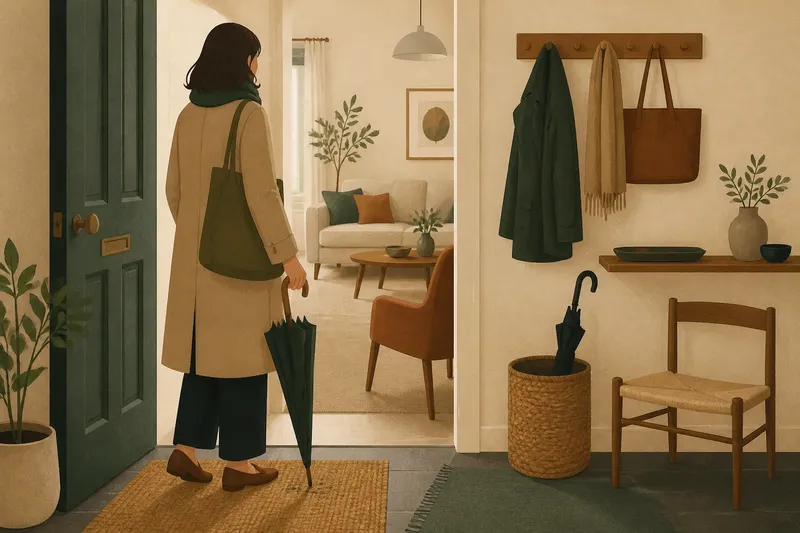
A guest steps in carrying a damp umbrella, a tote bag and the small uncertainty of arriving somewhere unfamiliar. The welcome begins before the door opens: a host can make the first moments feel easier by deciding where someone may pause, put belongings and begin talking.
This is not about arranging a perfect entrance. It is about removing small questions from a guest’s hands. The right arrangement depends on the doorway, the number of visitors and how well they know the home, so choose the arrival point that suits the occasion rather than copying a formal hall.
What kind of arrival does your home allow?
Start by noticing the route from the front door to the place where guests will spend time. A narrow passage, a shared stairwell or a door that opens directly into the sitting room each calls for a different welcome. Keep the route clear enough for people to enter without having to negotiate furniture or ask where to stand.
Then decide on three things: where someone can pause, where belongings can go, and where conversation can begin. These need not be three separate places. In a small home, a clear patch by the door and a chair nearby may serve all three purposes in sequence.
- A compact flat: Use a small, defined landing spot near the entrance, such as a wall hook and a clear shelf. It suits a home where a separate hall would crowd the route.
- A house with a hall: Let the hall absorb coats and bags, then guide guests towards a comfortable room. This keeps the doorway from becoming the gathering place.
- A direct-entry sitting room: Keep one chair or edge of a sofa available near the entrance, with a discreet place for belongings. It gives guests somewhere to settle without making them feel they have interrupted the room.
- A larger gathering: Make the first stop obvious and keep it close to the door. A basket for scarves or a coat rail can help, while a host’s greeting directs people onward.
Where should a guest pause?
A pause is the moment between arrival and settling in. It gives the host time to greet someone and gives the guest a chance to take in the room. A clear spot near the entrance works well if it does not block the door, a stair or the path to the main room.
In a narrow hall, avoid adding a decorative table simply because it seems traditional. A slim shelf can be useful if it leaves the passage comfortable; otherwise, a single wall hook or an empty chair just beyond the doorway may be kinder. The best pause point is one a guest can understand at a glance.
For a home where the front door opens into a busy kitchen, choose a small area outside the work zone. A chair at the edge of the room offers a place to wait while someone finishes at the hob, without making a visitor feel they must stand among hot pans or passing dishes.
Where can coats, bags and umbrellas go?
Give each common belonging a plausible destination. A coat hook, a rail, a basket for umbrellas or a clear chair can do the job; the point is to avoid making a guest carry everything while searching for permission. Keep the chosen place visible from the entrance or mention it naturally as you greet them.
For bags, consider whether visitors may need to reach a phone, keys or medication. A low shelf or spare chair can be more useful than a distant bedroom, and it avoids the awkwardness of asking someone to leave personal belongings out of sight. Keep fragile ornaments and serving items away from the landing spot.
Say you have a small hallway and a friend arriving with a wet coat and a work bag. You could leave one sturdy hook free, place a washable tray for the umbrella beside the door, and clear a chair just inside the sitting room; the expected result is that your friend can put things down without crossing the room or asking where they belong.
How should the first conversation begin?
The first point of conversation should be easy to reach, but it need not be a formal seating arrangement. It might be the kitchen island, a pair of chairs by a window or the sofa nearest the entrance. Choose a spot where you can welcome someone without turning your back to them to finish a task.
If you are serving a drink straight away, place it where guests can gather without crowding the doorway. A clear corner of the kitchen counter can work for an informal visit; for a more settled occasion, lead people to the sitting room and offer the drink there. The useful distinction is whether guests are expected to linger or move on promptly.
When several people arrive together, avoid making the first conversation depend on everyone finding a seat at once. A host can greet the group, point out the coat area and suggest a comfortable place to gather. This simple direction gives newcomers a reason to move beyond the threshold and helps regular visitors avoid clustering in the entrance.
Which welcome fits your guests and occasion?
What works when guests know the home well?
For familiar visitors, a light-touch welcome is usually enough: leave the usual coat hooks accessible and tell them where you are if you are in another room. They may appreciate being able to settle themselves, while a clear landing spot still prevents confusion.
How can you welcome someone visiting for the first time?
Make the route explicit with a brief greeting: point out where to leave a coat, then show them where you will talk. A first-time visitor cannot rely on household habits, so simple directions are more welcoming than expecting them to infer the routine.
What should change when several people arrive together?
Keep the entrance free of anything that creates a queue, and make the destination for coats easy to share. If the group will gather in a different room, name it as you greet them so nobody has to decide whether to wait at the door or follow someone else.
How should you plan for a guest with limited mobility?
Leave a clear, stable route and offer a seat near the entrance without assuming that the guest needs assistance. Ask discreetly if they would prefer to sit or continue to the main room, and adapt the arrangement to their answer.
What should stay out of the arrival route?
Keep the floor clear of shoes, shopping bags, trailing leads and decorative objects that narrow the way. A guest carrying belongings may not see a low obstacle, and an uncluttered route makes the transition from outside feel calmer without calling attention to itself.
Do not use the entrance as overflow storage for household items. If coats are already filling every hook, move some before people arrive; if a side table holds post and keys, clear a small area rather than asking visitors to balance belongings on top. The details that matter are the ones a guest must handle immediately.
For fire exits, access routes, mobility equipment and any building-specific restrictions, follow the relevant household, manufacturer or local guidance. Keep the welcome arrangement within those requirements instead of treating the entrance as a place to improvise.
How can you check the arrangement before guests arrive?
Walk in through the door as if your hands were full. Notice where you would pause, where you would put a coat and whether you could see where to go next. If the answer to any of those questions depends on opening a cupboard or moving an object, make the destination clearer.
Also consider the host’s position. If you will be cooking, choose a welcome point where you can greet people without abandoning a task or leaving them alone at the threshold. If another household member will answer the door, agree on the simple direction they will give so guests hear one clear invitation.
A relaxed arrival does not require a grand entrance or extra furniture. The welcome begins before the door opens when a guest can see where to pause, put belongings and find the first conversation; a little forethought lets the host greet people as people, rather than as a series of practical questions.